Leaf Shape or Bark Texture? Choosing Clues for Tree Identification
Tree identification is easier when you compare leaves, bark and buds, learning which clues narrow the possibilities and which can mislead.
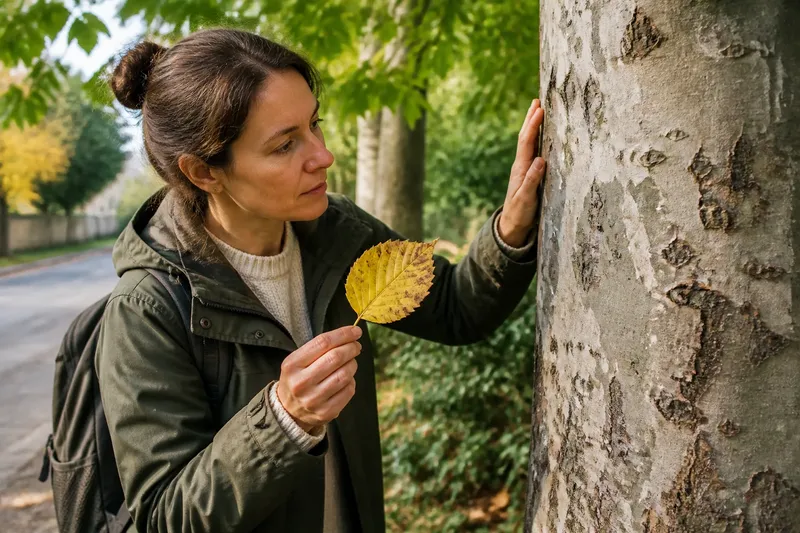
You stop beside a street tree with a fallen leaf in your hand: broad, toothed and turning yellow, but not quite familiar. Tree identification often begins with leaf shape, yet bark, buds and the place a tree is growing can help you check whether that first guess makes sense.
Start with a useful leaf
A leaf is a good first clue because it offers several features at once. Notice whether it is simple, with one blade, or compound, with several leaflets; then look at its outline, edge, veins and the way it attaches to the twig.
For example, an oval blade with a smooth edge points towards a different set of possibilities from a deeply lobed leaf or one with fine teeth. These shapes are clues, not names: unrelated trees can share a broad outline, and leaves on one tree may vary in size or form.
Check where the leaf sits before identifying it. A leaflet in a compound leaf is not a whole leaf, and confusing the two can lead you towards the wrong group. Look for a bud or leaf scar at the base of the complete leaf stalk; leaflets do not each have their own bud there.
If you can, inspect several leaves from different parts of the same tree. A healthy, sunlit shoot may carry leaves that look unlike those growing in shade, while damaged or newly emerged leaves can be awkward to compare with a field guide’s typical illustration.
Read bark in context
Bark is available when leaves are absent, and its surface can be distinctive: smooth, peeling, furrowed, scaly or marked with horizontal lines. Record what you see rather than reaching straight for a species name. “Pale bark with dark patches” is more useful later than “probably birch” if the guess has not been checked.
Look at a broad section of trunk, not a single patch. The lower trunk may be roughened by age, rubbing or damage, while higher branches retain a different surface. Mosses and lichens can obscure colour and markings, so treat them as features growing on the bark rather than parts of its pattern.
Bark colour also changes with wetness, light and the angle from which you view it. A quick note about texture and pattern is usually steadier than a colour impression taken in dappled shade.
Compare matching features
The strongest identification uses clues that belong together. Pair a leaf with its twig, noting whether leaves are opposite each other or alternate along the shoot, and whether buds are pointed, rounded, sticky or otherwise distinctive. Then see whether the trunk’s bark supports the same possibility.
Use a field guide or a reliable tree-identification app to compare those observations, not merely to confirm the first image that looks familiar. Check the guide’s drawings or descriptions against a real leaf attachment, a bud and a section of bark. If one feature does not fit, keep more than one candidate in mind.
Say you find an alternate-leaved tree with broad, toothed leaves and smooth grey bark. You note the leaf edges, the arrangement on the twig and the bark’s lack of deep furrows, then compare those details in a local guide. The expected result is a shorter list of plausible trees, not a name based on one matching trait.
Notice the growing place
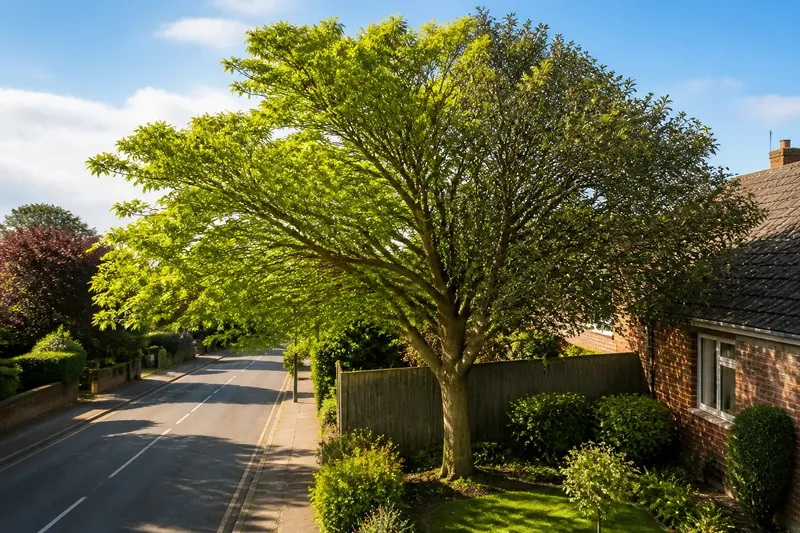
The setting can help distinguish trees with similar leaves. A specimen in a damp riverside strip, a dry hedgerow or a planted street bed may fit different candidates. Treat the setting as supporting evidence rather than a rule: planted trees can grow far from the habitats where they occur naturally.
Also ask whether you are looking at one tree or several similar trees planted together. Young street trees may have smoother bark than mature examples in a guide, and pruning can remove the twigs or branches that would otherwise provide useful clues. A label, if present, can be a helpful lead, but it is still sensible to compare the tree itself.
For a compact field note, record the location type, leaf arrangement, leaf edge, bud or twig details, and bark texture. A phone photograph of the whole tree and a close view of a leaf beside its twig can make later comparison easier. Avoid removing bark or breaking branches; fallen leaves and naturally accessible details are usually enough for an initial identification.
When do leaves or bark help?
Can bark identify a tree without leaves?
Sometimes bark narrows the options considerably, especially when its pattern is clear and distinctive. Check the trunk at more than one height and compare it with buds, twigs or fallen fruit if available, because bark alone can be ambiguous.
Why do leaves on one tree look different?
Leaf size and shape can vary with age, position and growing conditions. Compare several mature leaves from ordinary shoots rather than treating an unusual, shaded or damaged leaf as the tree’s standard form.
Should I identify a tree from a fallen leaf?
A fallen leaf can start the search, but it may have come from a nearby tree or lost details through decay. Check that it matches the leaves still attached to the tree, including the outline, edge and vein pattern.
Which clue should I record first?
Record the feature you can describe most clearly, then add an independent clue such as leaf arrangement or bark texture. There is no need to force a name while the evidence remains mixed; a careful, provisional identification is more useful than a confident guess.
Keep the effort focused
It is not worth trying to memorise every bark pattern or photographing every leaf on a tree. A few clear observations are easier to compare than a crowded camera roll or a page of uncertain labels.
When you return to a tree, add a clue that was unavailable before: winter buds after the leaves fall, flowers in season, or fruit beneath the canopy. Tree identification becomes more dependable as separate observations accumulate, and leaf shape or bark texture is most useful when each is checked against the other evidence around it.